ECO-PoLeIS – Participatory Legal Instruments for Climate-Neutral and Smart Cities
Jean Monnet Module - Project: 101176263
ERASMUS-JMO-2024-HEI-TCH-RSCH
Coordinator: Jacopo Paffarini – Università degli Studi di Perugia
Duration: 36 months (1 January 2025- 31 December 2027)
Abstract: The Jean Monnet Module ECO-PoLeIS (“Participatory Legal Instruments for Climate-Neutral and Smart Cities”) seeks to integrate local climate governance and deliberative/participatory democracy. Through its teaching, research, and outreach activities, the module will address the legal complexities of urban environments, crucial for the EU’s strategic emission reduction targets. Anchored in the EU Mission: Climate-Neutral and Smart Cities, ECO-PoLeIS revolves around the role of urban initiatives, in Europe and worldwide, such as citizens’ assemblies on climate change, illustrating the critical role of local climate action.
In alignment with Erasmus+ priorities, ECO-PoLeIS aims to fill gaps in public awareness and academic research on participatory climate governance tools, empowering young people for sustainable policymaking. The module therefore promotes inclusive and digital education, echoing the Council Recommendation on learning for the green transition and sustainable development.
ECO-PoLeIS supports other key EU strategies, including the European Green Deal and the EU Biodiversity Strategy for 2030, in order to incorporate citizen inputs into environmental policymaking. The module employs innovative educational methods, such as simulated citizens’ assemblies (MCAs), to provide immersive learning experiences. ECO-PoLeIS aims to enhance sustainable democracy education, foster international research networks, and establish multi-sectoral partnerships across academia, local governments, and private actors. The module will conduct interdisciplinary research and consolidate community outreach, facilitating exchanges between European and local representative bodies.
By fostering a better understanding of climate democracy among students and relevant stakeholders, ECO-PoLeIS sets out to influence policy-making processes, contributing to the creation of more sustainable and inclusive urban environments in Europe and beyond.
People
Module holder:
Jacopo Paffarini, Comparative Public Law, University of Perugia
Project team:
Maria Chiara Locchi, Comparative Public Law, University of Perugia
Simone Vezzani, European Union Law, Univesity of Perugia
Enrico Buono, Comparative Public Law, University “Luigi Vanvitelli”
Teaching Activities
1st Year: “Urban Dimensions of Climate Democracy”
The provisional programme for the first-year course, focused on the methodological dimensions of climate democracy, is planned as follows:
- The concept of climate democracy in the context of EU’s environmental policies;
- The difference between participatory and deliberative democratic tools;
- Local climate and environmental policies in a multi-level perspective;
- The role of assemblies in local governments;
- Deliberative mini-publics.
Teaching activities will be articulated as follows:
- 40 hours within Comparative Public Law and Transnational Law (9 ECTS); European Union Law (9 ECTS); International and European Environmental and Food law (6 ECTS), available in both bachelor’s and master’s degree programmes at the Law Department and the Department of Agricultural, Food and Environmental Sciences;
- 20 hours as a specific course, open to students at all levels—from high school through bachelor’s and master’s programmes, up to doctoral studies—as well as to political stakeholders in local governments, and non-specialists.
2nd Year: “Deliberative and Participatory Instruments for Climate Change Mitigation”
The provisional programme for the second-year course, focused on a more detailed analysis of the toolbox of participatory and deliberative climate democracy, is planned as follows:
- Legal instruments for the Anthropocene, encompassing climate change litigation and climate change mitigation;
- Participatory democracy and additional representative bodies in local governments;
- The French model of débat public and the Aarhus Convention;
- Deliberative democracy and specific deliberative practices;
- Deliberative mini-publics in the Irish experience and in a European perspective.
Teaching activities will be articulated as follows:
- 40 hours within Comparative Public Law and Transnational Law (9 ECTS); European Union Law (9 ECTS); International and European Environmental and Food law (6 ECTS), available in both bachelor’s and master’s degree programmes at the Law Department and the Department of Agricultural, Food and Environmental Sciences;
- 20 hours as a specific course, open to students at all levels—from high school through bachelor’s and master’s programmes, up to doctoral studies—as well as to political stakeholders in local governments, and non-specialists.
3rd Year:“Public Policy Making and the Role of Citizens’ Assemblies in Climate Neutral and Smart Cities”
The provisional programme for the third-year course, focused on citizens’ assemblies on climate change, is planned as follows:
- Comparative perspectives on citizens’ assemblies on climate change: national-level assemblies;
- The pilot experience of the Irish 2016-2018 Citizens’ Assembly;
- The 2019 French Convention Citoyenne pour le Climat and the Loi Climat et Résilience;
- Citizens’ assemblies as drivers of constitutional reform: the case of the 2022 Citizens’ Assembly on Biodiversity Loss in Ireland;
- Local-level citizen assemblies: recent case studies from Italy (Bologna, Firenze, Milano).
Teaching activities will be articulated as follows:
- 40 hours within Comparative Public Law and Transnational Law (9 ECTS); European Union Law (9 ECTS); International and European Environmental and Food law (6 ECTS), available in both bachelor’s and master’s degree programmes at the Law Department and the Department of Agricultural, Food and Environmental Sciences;
- 20 hours as a specific course, open to students at all levels—from high school through bachelor’s and master’s programmes, up to doctoral studies—as well as to political stakeholders in local governments, and non-specialists;
- A final simulation of a citizens’ assembly (Model Citizens’ Assembly) will be organized at the conclusion of the course (additional 15 hours in the final year).
ACTIVITIES:
Ist Joint Academic Workshop "The role of active citizenship in the Green Transition"
17 October 2025, h.14:30
Room 7, Department of Law
Università degli Studi di Perugia - LEARN MORE>
Ciclo di Seminari
Nei giorni 20 e 21 aprile 2026, presso l'Aula Magna del Dipartimento di Giurisprudenza si svolgerà l'evento dal titolo "Colloquio italo-brasiliano di Diritto comparato e Diritto internazionale”, che sarà dedicato alle dimensioni urbane, migratorie e sanitarie della governance climatica.
Il convegno - al quale parteciperanno, oltre a diversi docenti e dottorandi del nostro Dipartimento e di altri Atenei italiani, professori e magistrati brasiliani provenienti dagli Stati di Bahia e Santa Catarina - è pensato anche come momento di riflessione e condivisione dei risultati di ricerche promosse nell’ambito di diversi progetti attivi presso l’Università di Perugia (es. il Progetto More4Water, il Modulo Jean Monnet Eco-Poleis e il Progetto One Health). Sarà possibile seguire i lavori anche da remoto usando il link indicato nell’ultima pagina della LOCANDINA
Course Topic: “Urban Dimensions of Climate Democracy”
Duration: 40 hours of teaching within Comparative Public Law and Transnational Law (9 ECTS); European Union Law (9 ECTS); International and European Environmental and Food law (6 ECTS), available in both bachelor’s and master’s degree programmes at the Law Department and the Department of Agricultural, Food and Environmental Sciences.
Language: English/Italian
October/November 2025 - LEARN MORE>
Course Title: Building “Green Competencies”: the Dimensions of Climate Democracy
Duration: 20 hours
Language: Italian
October/November 2025 - LEARN MORE >
COURSE PROGRAMME
Topic “Deliberative and Participatory Instruments for Climate Change Mitigation”
Duration: 40 hours of teaching within Comparative Public Law and Transnational Law course(9 ECTS); European Union Law course (9 ECTS) and International and European Environmental and Food law course (6 ECTS), available in both bachelor’s and master’s degree programmes at the Department of Law and the Department of Agricultural, Food and Environmental Sciences.
Period: March-November 2026 LEARN MORE >
Workshop “Cittadinanza, democrazia e ambiente: quali modelli di partecipazione?“,
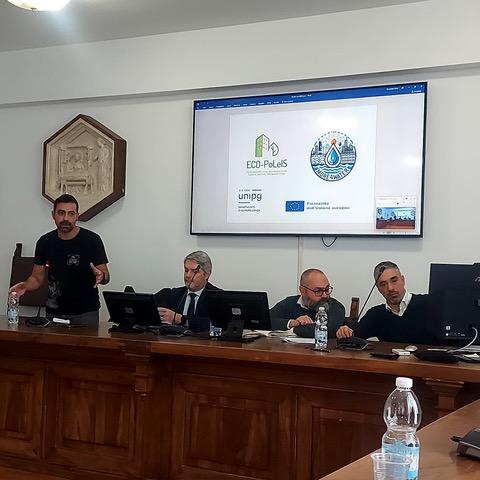
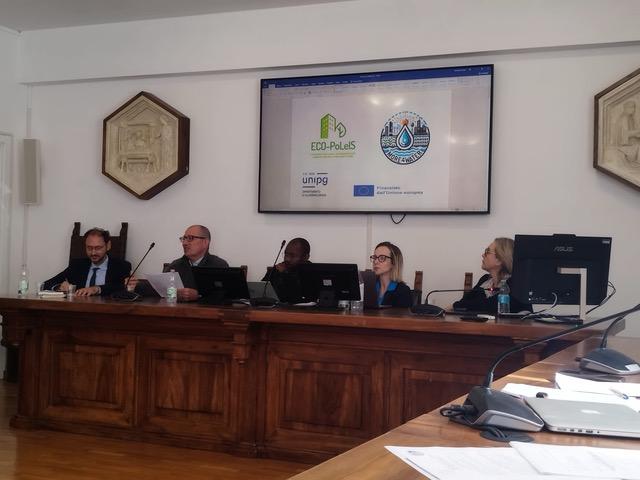
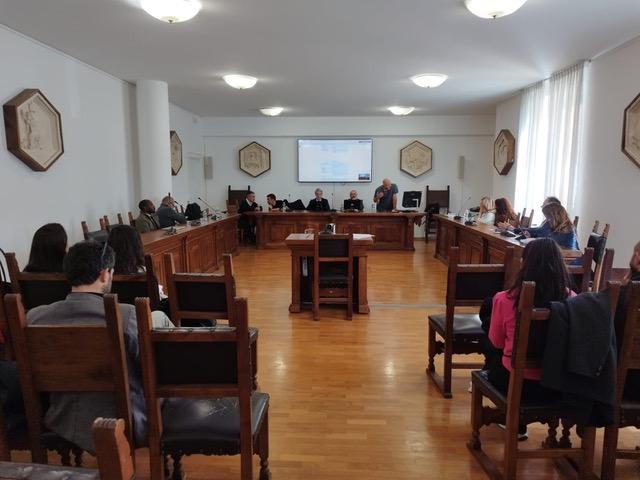
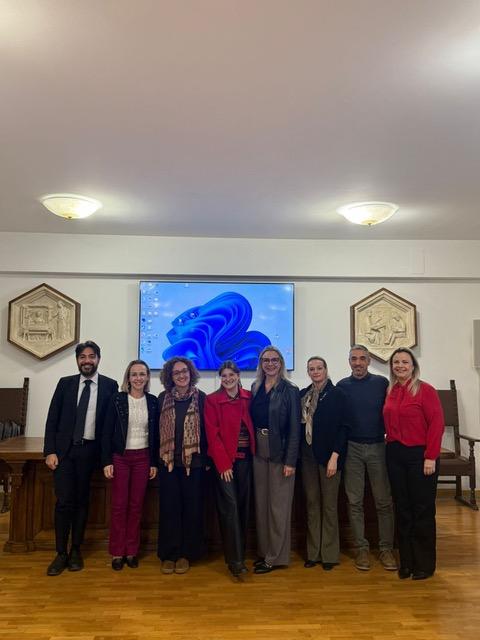
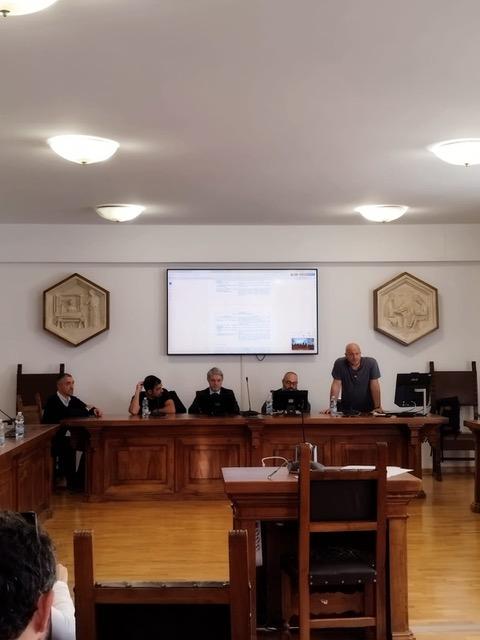
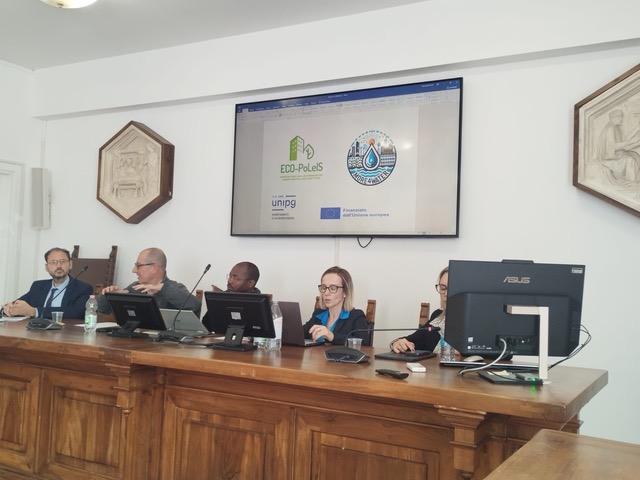
The event, which took place on October 27 and 28 at the Sala Lauree of the Department of Law, was organized jointly by the Jean Monnet Module "ECO-PoLeIS" and the "More4Water" research project, supported by the European funding program "Water4All." The collaboration between the two teams of researchers and professors stems from a shared need to rethink the rights and governance of natural resources, specifically by emphasizing the role of cities.
Program Highlights
- Day One: The opening session addressed the issue of water overconsumption linked to the expansion of new technologies, featuring presentations by three doctoral students from the Brazilian university Univali.
- Day Two (Morning): The focus shifted to a broader reflection on the potential developments of environmental democracy, drawing from experiences in the Global South. This session included contributions from two professors from Univali and two from the "Dom Bosco" Higher Institute in Mozambique.
- Day Two (Afternoon): The final session marked a "return from the global to the local" with a roundtable discussion. Participants included spokespeople from the purchasing groups "Perugia Solidale" and "Fuori di Zucca," the "Birà" food coop, Professor Biancamaria Torquati from the Department of Agriculture, the President of the Italian Farmers' Confederation (CIA) of Umbria, Matteo Bartolini, and the Councilor of the Municipality of Perugia, David Grohmann.
Overall, thanks to the excellent contributions of the speakers, the event clearly highlighted the theoretical and operational implications that the environmental crisis imposes on political participation. In particular, it showcased the ability of active citizenship to utilize tools provided by European regulations and domestic law to create local solutions—though these must successfully achieve proper coordination.
In closing, the ECO-PoLeIS team reaffirmed its commitment to ensuring continued dialogue between universities, institutions, and organized groups to support local policies and solidarity economy networks in the fight to protect the environment and achieve climate neutrality.
Click on the event photos to enlarge them.
 |
 |
 |
 |
 |
 |
“Funded by the European Union. Views and opinions expressed are however those of the author(s) only and do not necessarily reflect those of the European Union or EACEA-AJM.
Neither the European Union nor the granting authority can be held responsible for them.”